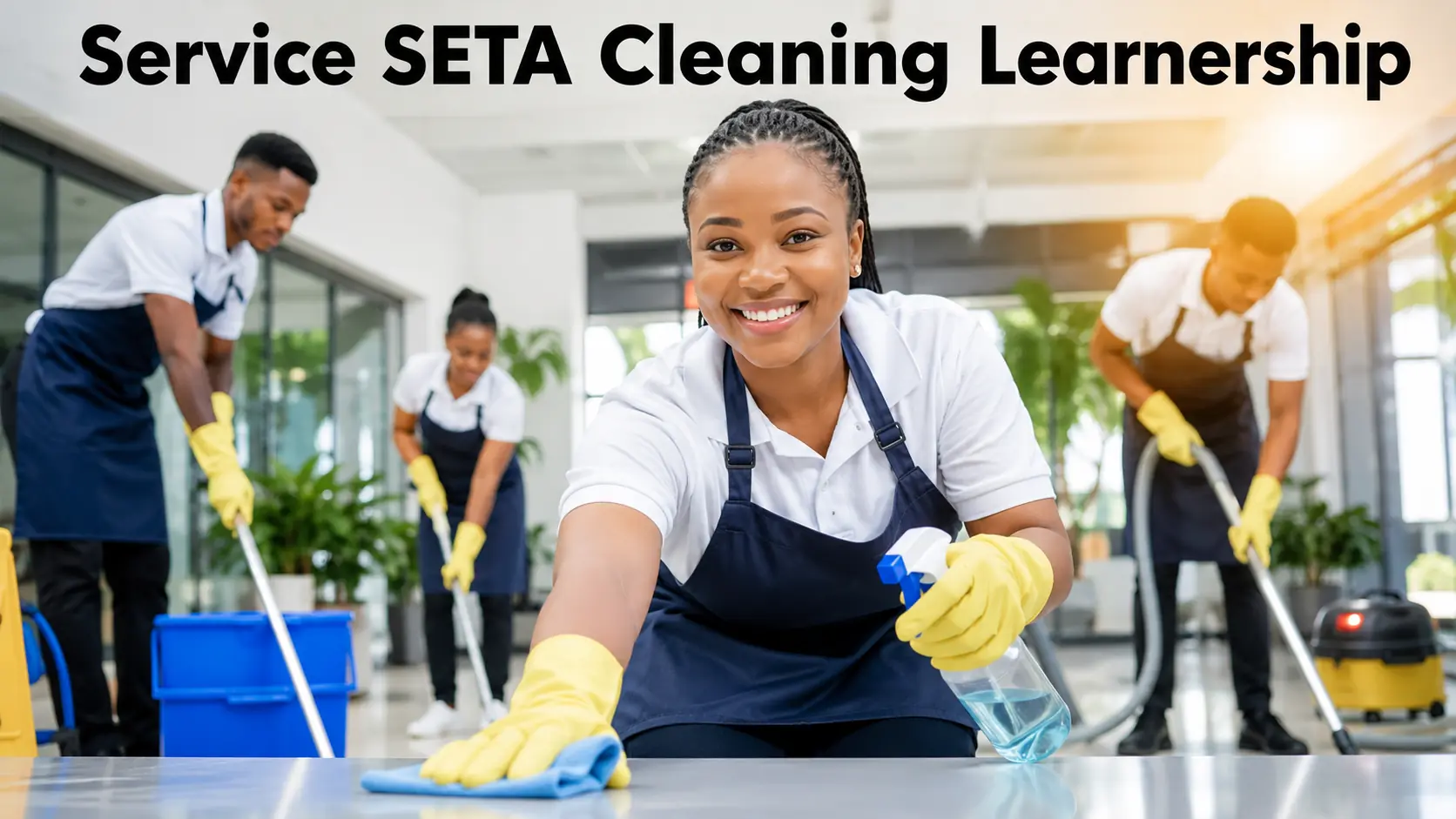
The Service SETA Cleaning Learnership 2026 offers more than workplace training—it provides an opportunity to develop nationally recognised skills that are needed across multiple industries. As South Africa continues to prioritise hygiene, workplace safety and professional facility management, qualified cleaning professionals are becoming increasingly valuable in both the public and private sectors.
Whether you are a recent school leaver, unemployed youth or someone looking to gain practical work experience, this learnership can help you develop skills that employers are actively looking for while earning an accredited qualification.
Why the Cleaning Industry Matters More Than Ever in 2026
The cleaning industry has changed significantly over the past few years. Employers now expect staff to understand health and safety regulations, infection prevention, environmental cleaning practices and the correct use of specialised cleaning equipment.
Professional cleaning services are essential in:
- Hospitals and healthcare facilities
- Schools and universities
- Hotels and guesthouses
- Shopping centres
- Office buildings
- Airports
- Manufacturing plants
- Government departments
- Residential estates
- Commercial properties
As South Africa continues investing in infrastructure, tourism, healthcare and commercial development, the demand for trained cleaning professionals continues to grow.
Rather than being viewed as entry-level work, professional cleaning is increasingly recognised as a skilled occupation that contributes directly to public health, workplace productivity and customer satisfaction.
What Is the Service SETA Cleaning Learnership?
The Service SETA Cleaning Learnership is a structured workplace learning programme that combines classroom-based learning with practical workplace experience.
Participants receive accredited training while gaining hands-on experience in real working environments.
The programme prepares learners to work confidently within professional cleaning environments while understanding industry standards, customer service and workplace safety.
Types of Cleaning Services Covered
The cleaning services sector is broad and offers opportunities across many specialisations.
Training may prepare learners for careers in areas such as:
- General commercial cleaning
- Carpet and upholstery cleaning
- Industrial cleaning
- Healthcare cleaning
- Domestic cleaning services
- Vehicle cleaning
- Aircraft cleaning
- Trauma and crime scene cleaning
- High-rise window cleaning
- Garden maintenance
- Dry cleaning and laundry services
- Cleaning equipment and consumable supply
These specialised areas provide multiple career pathways after completing the learnership.
Registered Qualifications
Depending on the training opportunity available, learners may complete one of the following nationally recognised qualifications:
- GETC: Hygiene and Cleaning (NQF Level 1)
- National Certificate: Specialist Hygiene and Cleaning Services (NQF Level 2)
- National Certificate: Hygiene and Cleaning Supervision (NQF Level 3)
Related article with useful information about service seta subsectors: SERVICE SETA SUBSECTORS
These qualifications are recognised within South Africa and can improve future employment opportunities.
Recommended School Subjects
Although requirements differ between employers, the following school subjects provide a strong foundation:
- English Home Language or First Additional Language
- Life Orientation
Strong communication skills, reliability and willingness to learn are often just as important as academic performance.
Career Opportunities After Completing the Learnership
Completing a recognised cleaning qualification can open doors to employment in several sectors.
Potential career paths include:
- Cleaning Services Manager
- Commercial Cleaner
- Domestic Cleaner
- Healthcare Cleaner
- Dry Cleaner
- Hygiene Assistant
- Industrial Cleaning Technician
- Facilities Cleaning Supervisor
Many employers also promote experienced cleaners into supervisory or team leader positions after gaining practical experience.
Why This Learnership Matters in 2026
The workplace has evolved considerably, placing greater emphasis on hygiene, safety and environmental responsibility.
In 2026, employers are looking for workers who understand:
- Infection prevention procedures
- Safe chemical handling
- Environmental sustainability
- Occupational health and safety
- Customer service
- Professional workplace conduct
- Efficient use of cleaning equipment
Completing an accredited learnership demonstrates that a candidate has received structured training rather than relying only on informal experience.
This makes applicants more competitive when applying for jobs within healthcare, hospitality, retail, government and commercial facilities management.
Other Listed open Opportunities
How the Programme Improves Career Prospects in 2026
Today’s employers increasingly value candidates who have both theoretical knowledge and practical workplace experience.
A Service SETA learnership helps participants by:
- Building practical workplace experience
- Developing employability skills
- Improving confidence
- Teaching professional workplace behaviour
- Introducing nationally recognised qualifications
- Creating opportunities for future promotions
- Providing transferable skills across multiple industries
Even if learners choose a different career later, many of the communication, teamwork and customer service skills gained remain valuable.
Qualities That Can Improve Your Chances of Being Selected
Selection processes differ between training providers, but applicants generally improve their chances by demonstrating professionalism throughout the application process.
Helpful steps include:
- Submit a complete application with all required documents.
- Ensure your CV is updated and free from spelling mistakes.
- Use a professional email address and active cellphone number.
- Respond promptly if contacted by the training provider.
- Be honest about your qualifications and work experience.
- Prepare for interviews by researching the cleaning industry.
- Show enthusiasm for learning and developing new skills.
Training providers often look for applicants who are reliable, punctual and willing to work in team environments.
Common Mistakes to Avoid
Many otherwise suitable applicants miss opportunities because of avoidable errors.
Avoid these common mistakes:
- Leaving sections of the application incomplete.
- Uploading blurry or unreadable documents.
- Using outdated contact details.
- Submitting applications after the closing date.
- Sending generic CVs without reviewing them.
- Ignoring email notifications from recruiters.
- Providing incorrect information.
- Applying without reading the programme requirements.
Taking a few extra minutes to review your application can significantly improve your chances.
Helpful Tips Before You Apply
Before submitting your application:
- Prepare certified copies of your qualifications if requested.
- Save digital copies of important documents.
- Check that your CV includes your latest information.
- Proofread your application carefully.
- Keep copies of everything you submit.
- Monitor your email regularly after applying.
Being organised demonstrates professionalism and readiness for the workplace.
How to Apply
Applicants interested in future Service SETA Cleaning Learnership opportunities can submit their CV through the official online application portal using the keyword “Service SETA Cleaning Learnership.”
Official online application portal:
https://servicesseta.mcidirecthire.com/default/External/SubmitCV
Only submit applications through the official recruitment platform and avoid paying anyone who claims they can secure placement.
Final Thoughts
The Service SETA Cleaning Learnership 2026 represents far more than an opportunity to gain work experience. It provides practical skills, nationally recognised training and exposure to an industry that supports healthcare, hospitality, education, manufacturing and many other sectors across South Africa.
As employers continue placing greater emphasis on professional hygiene standards and workplace safety, qualified cleaning professionals are expected to remain in demand. For individuals committed to learning, maintaining high standards and building a sustainable career, this learnership can serve as an excellent starting point toward long-term employment and career growth.