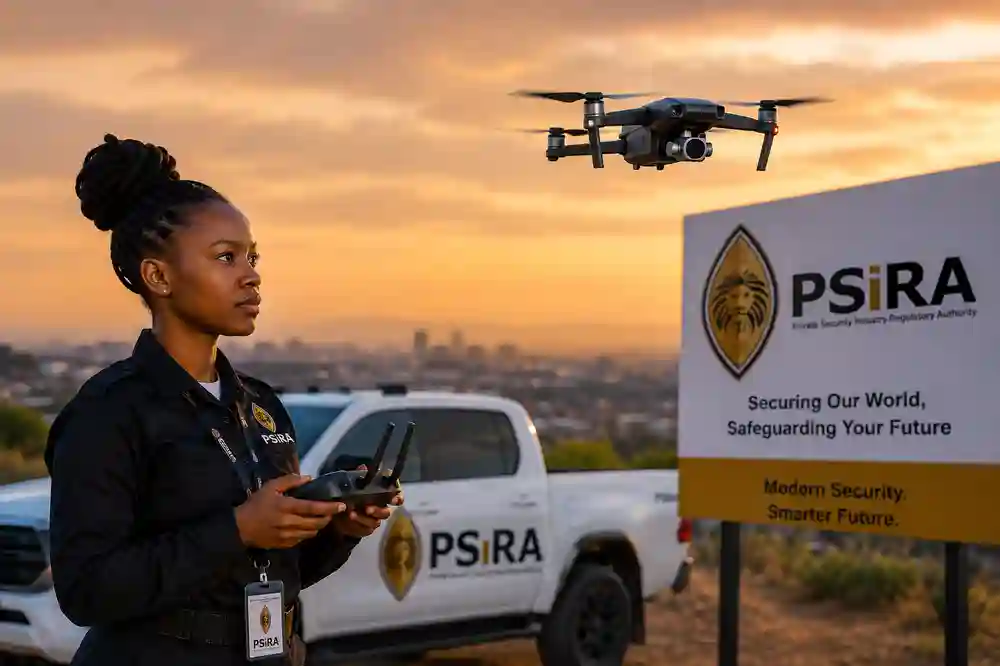
PSIRA has opened applications for its Women Drone Pilot Skills Training Programme 2026. South African women aged 18–40 with Matric and PSIRA registration can apply before 14 August 2026 for a 6–8 week drone pilot training opportunity.
PSIRA Drone Programme 2026: Women Drone Pilot Skills Training Opens for South African Female Security Officers
The Private Security Industry Regulatory Authority (PSIRA) has opened applications for the second intake (Phase 2) of its Women Drone Pilot Skills Programme, creating a unique opportunity for South African women who want to develop drone operation skills for the private security industry.
As technology continues to transform security operations, drones are increasingly being used for surveillance, perimeter monitoring, event security, infrastructure inspection, crowd observation, and emergency response support. PSIRA’s initiative is designed to help women gain access to these emerging technology-driven opportunities within the security sector.
This guide explains who can apply, what the programme involves, the required documents, important conditions, and practical steps applicants should take before the closing date.
What is the PSIRA Drone Programme?
The PSIRA Drone Programme 2026 is a specialised Women Drone Pilot Skills Training Programme aimed at empowering female security officers with practical drone operation knowledge and industry-relevant technical skills.
According to the programme notice:
- The initiative follows a successful first intake launched in 2025.
- 64 female beneficiaries reportedly completed the earlier phase of the programme.
- The new intake focuses on developing drone pilot skills that can support careers in the private security industry.
The programme is intended to provide participants with exposure to modern security technology and drone-based operational concepts.
Why drone skills are becoming important in security
Traditional security roles are changing rapidly. Many security companies now use unmanned aerial systems (UAS) to improve efficiency and coverage.
Common security uses for drones
- Monitoring large properties and industrial sites
- Detecting unauthorised access
- Supporting patrol operations
- Observing high-risk areas without exposing officers to danger
- Assisting with search operations
- Providing aerial situational awareness during incidents
- Supporting event and crowd management operations
Learning how drone operations work can help security personnel become more adaptable and technologically skilled in a competitive industry.
Programme duration
Training period
The notice indicates that the programme will run for approximately 6 to 8 weeks.
This suggests that the training is designed as an intensive short-course skills programme rather than a long-term academic qualification.
Successful participants can expect a combination of:
- Online theoretical learning
- Drone operation concepts
- Regulatory and safety awareness
- Practical aviation-related requirements communicated during the selection process
Who can apply?
The programme is specifically targeted at female security officers.
Selection criteria
Applicants must:
- Be a South African citizen
- Be between 18 and 40 years old
- Have a Matric certificate
- Have obtained more than 50% for English
- Be in good health
- Be female
- Be PSIRA registered and in good standing
- Have an interest in technology and drone operations
Because PSIRA registration is required, this opportunity is most suitable for women who are already part of the private security industry or who have completed the necessary PSIRA registration process.
Understanding the English requirement
The notice specifies that applicants must have over 50% for English in Matric.
This requirement is important because drone operations involve:
- Reading technical instructions
- Understanding aviation and safety terminology
- Completing operational documentation
- Communicating effectively during training and security operations
Applicants should therefore ensure that their Matric certificate clearly shows their English results.
Required application documents
Applications must be submitted by email and should include the following:
Required documents
- Completed application form
- Curriculum Vitae (CV)
- Certified copy of South African ID
- Certified copy of Matric certificate
- Copy of PSIRA certificate
Application email
Before sending your application, check that all scanned documents are:
- Clear and readable
- Properly certified where required
- Saved in PDF format
- Correctly named for easy identification
Important closing date
Application deadline
14 August 2026
Late applications may not be considered, so applicants should submit their documents well before the closing date to avoid email delivery or attachment problems.
Important conditions applicants must understand
The programme notice includes several conditions that are easy to overlook.
No stipend is payable
The training programme does not provide a stipend, so applicants should plan accordingly.
Internet access is required
The notice states that no data or internet will be provided for the online theory component, meaning participants must have access to:
- A reliable internet connection
- A smartphone, tablet, or computer capable of accessing online learning materials
Medical examination requirement
Successful candidates will be required to undergo an Aviation Class III Medical Examination.
This is an important aviation-related requirement that helps determine whether a candidate meets the relevant medical standards associated with the training process.
Accommodation and transport
The notice indicates that accommodation and transport to the training facility will be provided, which is a significant benefit for participants who may need to travel from different parts of South Africa.
How to prepare a stronger application
Many applicants submit only basic documents. A more professional application can improve your chances of being shortlisted.
Suggested email subject line
PSIRA Drone Programme 2026 – [Your Full Name]
Recommended attachment names
Nomsa_Dlamini_CV.pdfNomsa_Dlamini_ID.pdfNomsa_Dlamini_Matric.pdfNomsa_Dlamini_PSIRA_Certificate.pdf
This makes it easier for recruiters to process your application.
What to include in your CV
Even if you have limited work experience, your CV should highlight security-related and technology-related strengths.
Useful sections
Personal Details
- Full name
- Contact number
- Professional email address
- Residential area
Education
- School attended
- Year completed
- English percentage achieved
Security Experience
Include:
- Security officer positions
- Control room experience
- Access control duties
- Patrol responsibilities
- Incident reporting experience
- CCTV monitoring exposure
Technical Skills
Examples:
- Computer literacy
- Smartphone and tablet use
- CCTV systems
- Radio communication
- Report writing
- Basic Microsoft Office skills
Additional Strengths
- Attention to detail
- Observation skills
- Reliability
- Ability to follow safety procedures
- Interest in technology and innovation
Why this programme is particularly important for women
Technology-focused opportunities in the security industry have historically had lower female participation rates. Programmes such as this can help increase women’s representation in areas involving:
- Security technology
- Surveillance systems
- Aviation-related operations
- Remote monitoring
- Digital security support functions
Developing drone-related skills may also expose participants to future career pathways beyond traditional guarding roles.
Common mistakes applicants should avoid
Sending uncertified copies where certification is required
Ensure your ID and Matric certificate are properly certified if requested.
Applying without valid PSIRA registration
The programme requires applicants to be PSIRA registered and in good standing.
Ignoring the English requirement
Applicants should confirm that their English result is above 50% before applying.
Using poor-quality scans
Blurry cellphone photos can make documents unreadable and may negatively affect the application process.
Forgetting the application form
The notice specifically requires a completed application form, so do not send only a CV and supporting documents.
Who should seriously consider applying?
This programme is particularly suitable for:
Female security officers who:
- Hold a valid PSIRA registration
- Have completed Matric with more than 50% for English
- Are interested in technology and innovation
- Want to move beyond traditional security duties
- Are willing to participate in online learning and practical training components
It may be especially valuable for women working in:
- Corporate security
- Estate and residential security
- Industrial security
- Control rooms
- CCTV monitoring environments
- Event security operations
What happens after the closing date?
The notice indicates that training dates will be communicated to successful applicants.
Shortlisted candidates may therefore receive:
- Confirmation of selection
- Details about the online theory component
- Information about the medical examination process
- Travel and accommodation arrangements for the practical training component
Because of the competitive nature of specialised skills programmes, applicants should ensure that their phone number and email address remain active after submitting the application.
Final Thoughts
The PSIRA Drone Programme 2026 represents a forward-looking initiative that combines women’s empowerment, security sector development, and emerging drone technology skills.
Quick summary
- Programme: PSIRA Women Drone Pilot Skills Programme – Phase 2
- Duration: 6–8 weeks
- Target group: Female PSIRA-registered security officers
- Age requirement: 18–40 years
- Education: Matric with more than 50% for English
- Application method: Email application
- Email: droneprogramme@psira.co.za
- Closing date: 14 August 2026
- Stipend: No stipend payable
- Benefit: Accommodation and transport to the training facility will be provided
For women who are already active in the private security industry and want to develop technology-oriented skills, this programme offers an opportunity to gain exposure to a growing area of security innovation and drone-supported operations.
Submitting a well-organised application with all required documents, a professional CV, and accurate contact information before 14 August 2026 will give applicants the best chance of being considered for this specialised training opportunity.